
- 作者:顺北宗
- 来源:妈妈咪呀
- 发布时间:2026-08-26
虎牙直播
Chinese animated hit "All Wishes Come True" makes North American premiere_我的网站

一 |
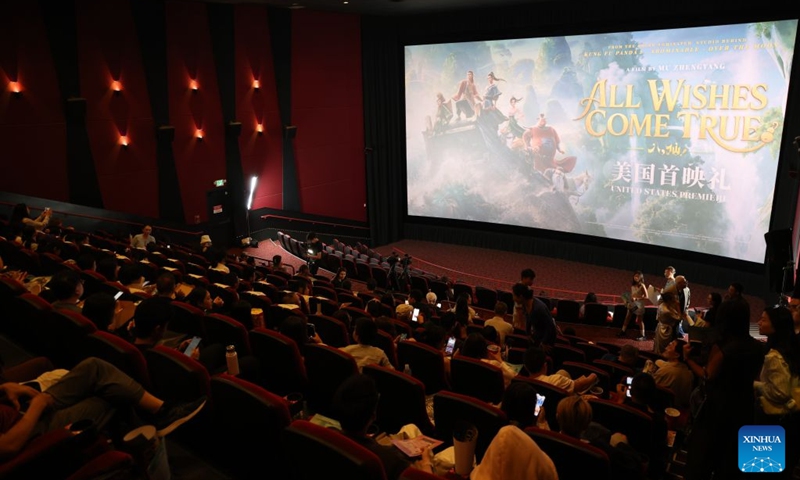
Chinese animated fantasy-comedy "All Wishes Come True" held its North American premiere Thursday night in Los Angeles, ahead of its theatrical release across the United States and Canada on Friday.
The film, inspired by the classic Taoist tale of the Eight Immortals crossing the sea, has emerged as a box-office hit in China this summer, winning both critical acclaim and commercial success. It has grossed more than 1.51 billion yuan (224 million U.S. dollars) at China's domestic box office as of Friday, according to Maoyan, a Chinese movie-ticketing and film data platform.
The film was written and directed by Mou Zhengyang, with voice direction by Chen Hao, whose credits include "Ne Zha" and "Ne Zha 2."
"All Wishes Come True" has received strong feedback from Chinese moviegoers, earning a rating of 9.7 out of 10 from more than 241,000 viewers on Maoyan.
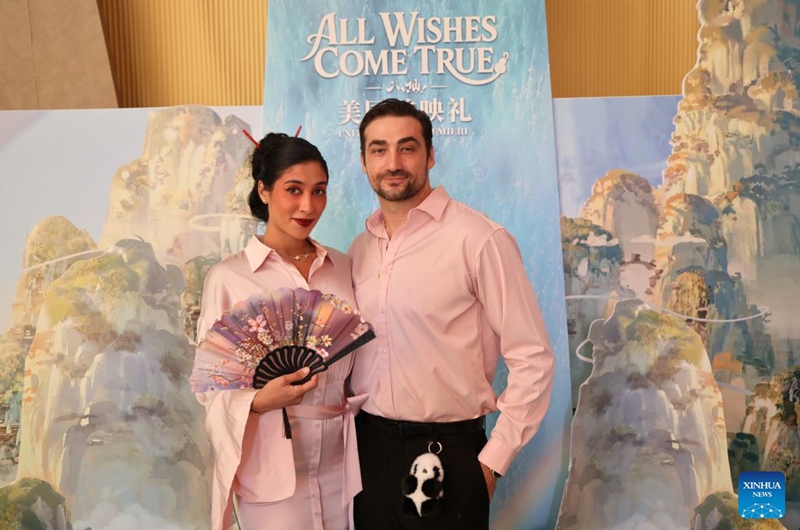
Hannah Avison, a songwriter and content creator, gave the film a perfect 10 out of 10 after attending its premiere, praising it as a universal story about people coming together.
"The animation was beautiful. It was a beautiful story," Avison told Xinhua. "There were so many twists and turns, and the plot was really incredible. I never knew what to expect. I was constantly on the edge of my seat."
"I'm not usually a fan of long movies, but I was engaged the entire time," said Hollywood actor and producer John Kyle Sutton. "There was an incredible amount of Eastern mythology."
"I do think movies like this can attract U.S. audiences and inspire them to learn more about Chinese culture," he added. "I was really impressed by the artistry, the writing, and the animation style. The voice actors were all top-notch. Hats off to all the creators, everyone who worked on it, and the director. They were fantastic."
"All Wishes Come True" is being released by CMC Pictures in Mandarin with English subtitles in more than 100 selected theaters across Los Angeles, San Francisco, New York, Las Vegas, Seattle, Chicago, Dallas, Atlanta, Toronto, Vancouver, and dozens of other North American cities with large Chinese communities.



。
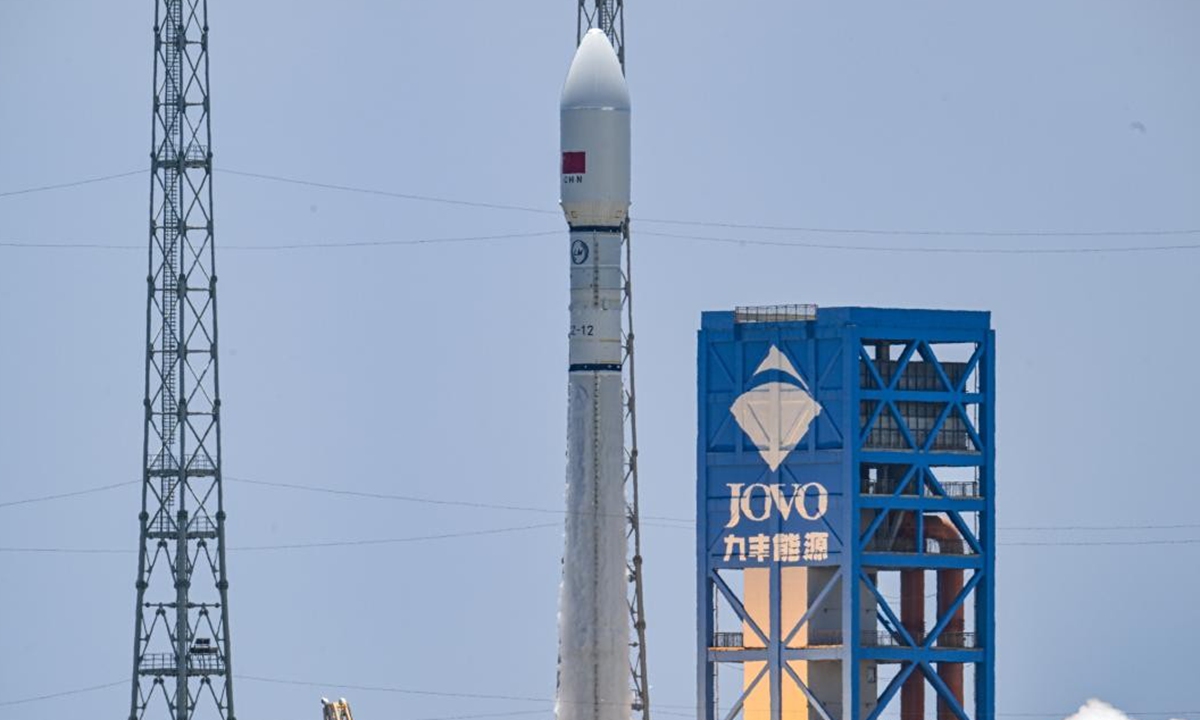
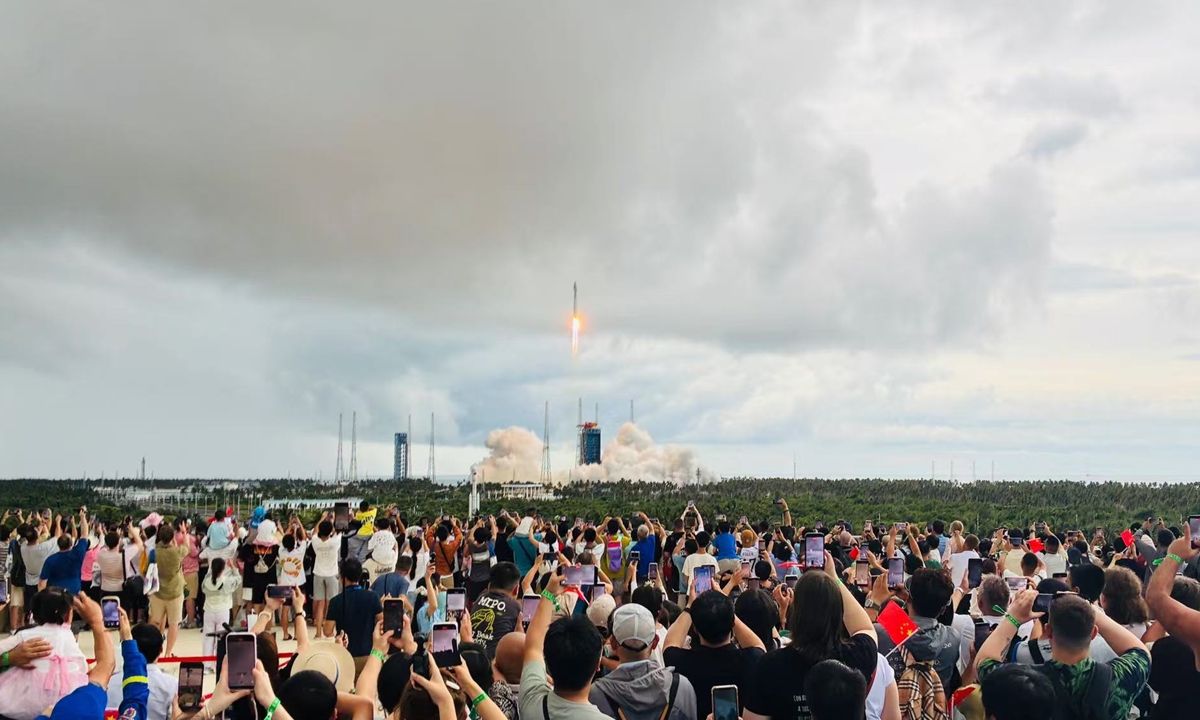
Two successful launches among China's recent frequent moves caught particular attention of space watchers - the 24th group of low-Earth orbit internet (LEO) satellites aboard a Long March-12 rocket was sent from a commercial spacecraft launch site in the southern island province of Hainan on Sunday, 12 days after the 23rd group of LEO satellites aboard a Long March-8A rocket was launched from the same Hainan site on August 4.
Sunday's mission marked the 663rd launch of the Long March series of carrier rockets, which on Monday sent an SEO satellite into preset orbit, per Xinhua.
Experts said the launches of two groups of LEO satellites within 12 days underlined that China is notably accelerating its pace of building its satellite internet constellation.
"The launch of LEO satellites has now entered a regular and cyclical rhythm, with batches of satellites continuously being sent into orbit at relatively stable intervals," Kang Guohua, a senior member of the Chinese Society of Astronautics and a professor of Aerospace Engineering at Nanjing University of Aeronautics and Astronautics, told the Global Times on Monday.
China launched the first group of LEO internet satellites on December 16, 2024, proceeding to the 24th batch in about 20 months. Kang said three major production and launch "assembly lines" are supporting the effort: satellite factories featuring centralized design in Beijing, coordinated supply chains and mass production; rockets with streamlined launch and testing procedures and multiple configurations; and launch sites capable of supporting routine constellation deployment.
The Long March-12, which played a key role in the latest LEO satellite launch, is China's first 4-meter-class single-core-stage carrier rocket and was specifically developed for commercial launch needs. It is about 62.6 meters long, has a liftoff mass of 430 tons and can carry more than 12 tons to low-Earth orbit. Its first stage is equipped with four 1,250-kilonewton pump-fed liquid oxygen-kerosene engines and uses a newly developed coal-based aerospace kerosene, according to Shanghai Academy of Spaceflight Technology.
The rocket adopts a "three-horizontal" launch preparation model: horizontal assembly, horizontal testing and horizontal transportation. Depending on mission requirements, it can use fairings with diameters of 4.2 or 5.2 meters and support both single-satellite and multi-satellite launches into different orbits.
"This flexibility makes the Long March-12 particularly suitable for the 'one rocket, multiple satellites' model required for constellation deployment, making it one of the main launch vehicles currently used for LEO constellation missions," Kang said.
The mission also highlighted the launch site's growing ability to support high-frequency launches. The rocket took only two and a half days from being transported to the launch area to liftoff, setting a record for the shortest time a rocket occupied the launch position at the site, Kang said.
Despite the rapid progress, experts cautioned that the 228 satellites currently in orbit remain some distance from the ultimate goal. China's satellite internet project has a long-term goal of deploying nearly 8,000 satellites and is now in an accelerated "weaving" phase.
China's advantage lies in its ability to control costs and boost production efficiency once satellite manufacturing reaches mass-production scale, another expert surnamed Liu told the Global Times.
"Whether it is the production capacity of AI centers or the factory in Hainan, which has an annual satellite manufacturing capacity of 1,000 units, satellite production itself is not the problem," Liu said. "More bottlenecks lie in the operational efficiency of launch pads and the rocket payload and recovery technology."
The real challenge lies in rocket reusability. Only by lowering launch costs and increasing launch frequency can China sustain a pace of more than one launch per week. This is also the strategic significance of accelerating the development of reusable rocket technology, including the Long March-10B and privately developed rockets, Kang further noted.
Chinese Academy of Engineering academician Deng Zhongliang previously said in an interview that satellite internet will serve as an indispensable space-time infrastructure for 6G, enabling emerging industries worth trillions of yuan, including the low-altitude economy, advanced autonomous driving and the Internet of Things (IoT).
。
Current article:http://q7y.zhuaicaisaanzhenshunnaiwei.bond/08isfg/20260826/4220.html
Published on:08:19:43
- 本文标签:
- 风车