潜行狙击
1,500-year-old glazed pottery reveals Eurasian cultural exchanges in ancient northern China_我的网站

一 | 彩票不仅是幸运的小游戏,更是随手公益的小善举。
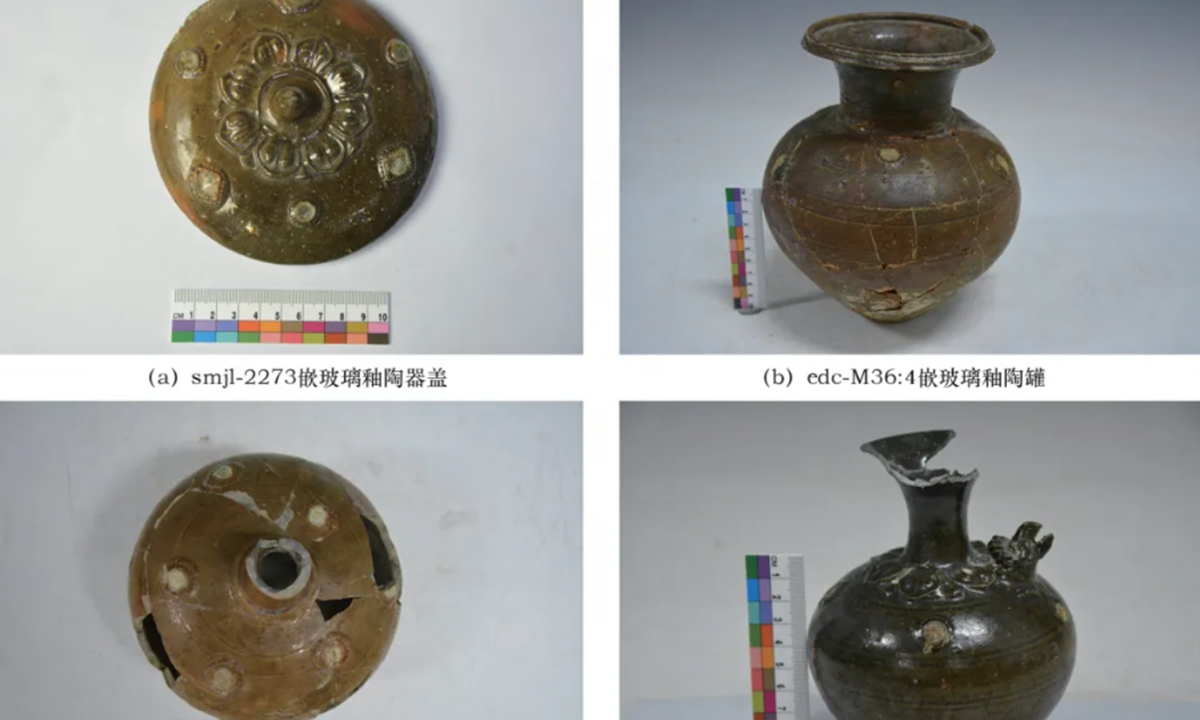
Samples of glazed pottery embedded with glass excavated from Northern Wei tombs in Pingcheng Photo: Courtesy of Shanxi Provincial Institute of ArchaeologyRare glass-inlaid glazed pottery artifacts unearthed from ancient tombs in Northwest China's Shanxi Province have provided new evidence of extensive cultural and trade exchanges between ancient China and other regions more than 1,500 years ago, according to a press release that the Shanxi Provincial Institute of Archaeology sent to the Global Times on Tuesday.
Systematic analysis conducted by the institute of pottery wares dating back to the Pingcheng period of the Northern Wei Dynasty (386-534) has identified distinct foreign cultural and technological elements embedded in the craftsmanship and material composition of the unique artifacts, shedding fresh light on ancient Eurasian cultural integration.
Established by the Tuoba Xianbei ethnic group, the Northern Wei Dynasty designated Pingcheng, present-day Datong city in Shanxi Province, as its capital from 398 to 494. For nearly a century, the city served as a pivotal multicultural hub where Xianbei nomadic culture, Central Plains Han culture and diverse Western Regions civilizations converged and interacted, according to a report on Chinanews.com.cn.
Archaeological excavations at multiple tomb clusters in Pingcheng, including the Dongxin Northern Wei cemetery and the Qilicun cemetery, have yielded a total of eight pieces of glass-inlaid glazed pottery. Though far fewer in number compared with common glazed pottery figurines and painted glazed wares, these artifacts feature an extremely rare inlay technique unseen elsewhere in the developmental history of Chinese ceramics, according to the press release.
Given the exceptional rarity and good preservation of the relics, researchers selected four representative pieces for comprehensive laboratory testing and material analysis. The results show that the glass inlays are primarily soda-alumina glass, most likely produced by remelting trade beads from the Indian Ocean and Pacific regions, a key commodity in ancient maritime and overland trade networks.
The findings confirm that Pingcheng maintained frequent cross-border trade and cultural communication during the Northern Wei era, with access to glass raw materials sourced from diverse overseas regions. The varied compositional characteristics of the inlaid glass provide crucial clues for studying ancient glass-making technologies, raw material circulation and long-distance trade routes in ancient East Asia, the press release noted.
Beyond material composition, the artifacts also embody prominent cross-cultural innovation in design. Their decorative motifs draw heavily on gem-encrusted gold and silver wares of the Sasanian Persian Empire, while integrating artistic elements from other Eurasian regions. The blended design styles reflect the era's prevailing trend of multicultural fusion and creative assimilation of foreign civilizations.
Archaeologists noted that the glass-inlaid glazed pottery represents an innovative technological achievement crafted by Northern Wei artisans who absorbed and refined foreign techniques and aesthetics. The distinctive craftsmanship and stylistic features of these wares exerted a far-reaching influence on ceramic production in surrounding regions and subsequent dynasties, marking a vital chapter in the evolution of ancient Chinese ceramic art.
The research underscores that ancient China's northern borderland was not an isolated cultural enclave, but an active node in Eurasian cultural and trade exchanges, where foreign elements were localized and innovated to form unique regional civilizational achievements, archaeologists from the Shanxi Provincial Institute of Archaeology said.
。 生活需要一点儿小盼头,更需要不期而遇的小惊喜。 通勤路上或周末闲暇时,顺手买张双色球,让好运降临,让善意发光。 来,一起看看双色球最新开奖,看看这份幸运降临在了哪里~ 7月16日,双色球第2026081期开奖,红球号码是:6、10、12、15、24、27;蓝球号码是:12。当期销售3.50亿元,筹集公益金1.26亿元;中出一等奖5注,单注奖金808.27万元,吉林、浙江、山东、湖北、贵州各1注。当期中出二等奖137注,单注奖金14.06万元;下期一等奖奖池金额4.01亿元。 无论中奖与否,您手中的每一张彩票,都在做着一件温暖的事。一张2元的双色球彩票,其中就有0.72元公益金用于社会公益事业。聚少成多、聚沙成塔——近期,民政部发布2025年度彩票公益金使用情况公告:按照福利彩票“扶老、助残、救孤、济困”的发行宗旨,29.82亿元彩票公益金统筹用于老年人福利、残疾人福利、儿童福利、社会公益四个方向;5亿元彩票公益金专门用于114个试点区(县)探索解决县域老年人在养老服务、精神障碍患者在社区康复服务、困境儿童在健康成长等方面面临的实际困难。

二 | 幸运会迟到,但善意总在发光。生活的迷人之处,在于其不确定性和永远有未知的惊喜。一张小小的双色球,承载着对明天的美好期许,也传递着温暖社会的善意。

三 | 不妨在通勤路上或饭后散步时,顺手买一张彩票吧。

四 | 给自己留个小盼头,也让好运与善意继续同行。

五 | 祝你我,皆好运! 双色球开奖时间每周二、四、日,21:15开奖直播。

六 |
Current article:http://q7y.zhuaicaisaanzhenshunnaiwei.bond/list_jdg/90oi.html
Published on:14:38:17


 Supreme Court leaves in place court victory for PETA over North Carolina ag-gag law
 元首外交 | 共同开创中哈关系发展又一个黄金三十年_习近平_努尔苏丹
 金正恩用这些人与美国打交道:朝鲜外务省对美人事布局
 新币兑人民币飙升至5.47,汇款生意火爆!部分资金冻结受害者已退款
![[거제소식] 전국해양스포츠제전 최종 취소 결정 등](/tupian_1/5lZLR5Xd.jpg) [거제소식] 전국해양스포츠제전 최종 취소 결정 등
[거제소식] 전국해양스포츠제전 최종 취소 결정 등
 PowerColor发布了两款紧凑型egfx设备:带AMD RX 560/570